Australian Kelpies: The Ultimate Working Ranch Dog for Texas
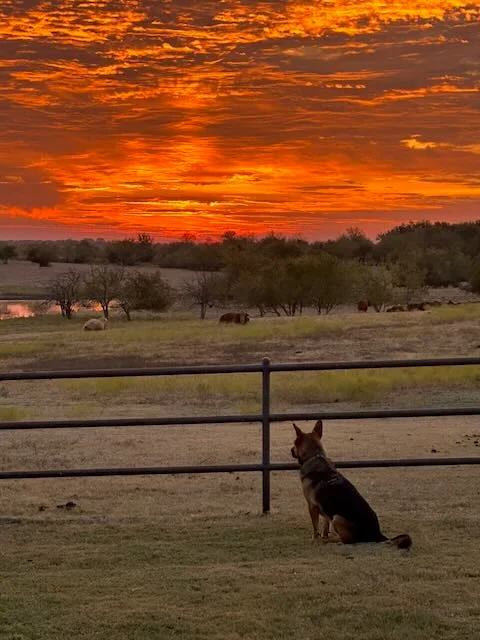
If you’ve ever watched a well-trained working dog move cattle, you know it’s something special. The right dog can do the work of several horseback riders, and they’ll do it in scorching Texas heat without complaint.
At EC Ranch, we’ve worked with various breeds over the years—Border Collies, Australian Cattle Dogs, and others—but Australian Kelpies have proven themselves the most reliable, versatile, and heat-tolerant cattle dogs we’ve ever owned.
Here’s why Kelpies have earned their place as our breed of choice on our 300-head commercial Beefmaster operation.
What Makes Kelpies Different
The Breed Background
Australian Kelpies were developed in the 1800s from Scottish Collies bred with Dingoes, creating a dog specifically designed for Australia’s harsh climate and challenging cattle work. The result is a medium-sized working dog with exceptional stamina, intelligence, and natural cattle-handling ability.
Key Kelpie characteristics:
- Size: 35-45 pounds (females), 40-50 pounds (males)
- Height: 17-20 inches at the shoulder
- Coat: Short, weather-resistant double coat
- Colors: Black, red, chocolate, fawn, blue, or tan
- Lifespan: 12-15 years
- Energy level: Very high
- Working drive: Intense
Why They Excel in Texas Heat
This is the critical advantage for Texas ranchers: Kelpies were literally bred to work in heat. While Border Collies often struggle when temperatures hit 95+ degrees, Kelpies keep working.
Heat tolerance traits:
- Short coat doesn’t trap heat
- Efficient cooling system
- Natural stamina that doesn’t quit
- Smart about finding shade and water
- Pacing that conserves energy
On EC Ranch, we regularly work cattle in summer when temperatures exceed 100°F. Our Kelpies can work a full morning without overheating, something we couldn’t say about other breeds we’ve tried.
Natural Working Ability: What Kelpies Do Best
Gathering and Driving
Kelpies excel at bringing cattle in from pasture and driving them to pens or new pasture. Their natural working style includes:
Wide, smooth casts: A good Kelpie will circle wide around cattle to avoid pushing them the wrong direction
Steady pressure: They maintain consistent pressure without rushing or panicking cattle
Natural balance: They position themselves to keep cattle moving in the desired direction
Independent thinking: Once they understand the job, they’ll work with minimal direction
Stamina: They can gather pastures all day without tiring
Pen Work and Sorting
In close quarters, Kelpies shine at:
- Holding cattle in pens
- Moving groups through chutes and alleys
- Singling out individuals for sorting
- Backing cattle that won’t move
- Maintaining control in tight spaces
The “eye” factor: Unlike Border Collies that rely heavily on “eye” (intense staring to control livestock), Kelpies use a more balanced approach combining eye, positioning, and movement. This makes them less likely to lock up on stubborn cattle.
Working Cattle on Command
A well-trained Kelpie responds to:
- Directional commands (come bye, away, get back)
- Pace control (steady, slow, hurry)
- Stop and stay commands
- Recall (come, here, that’ll do)
At EC Ranch, our Kelpies understand both voice and whistle commands, giving us flexibility when working cattle at different distances.
Temperament and Personality
Working Drive
Kelpies have intense working drive. This is both their greatest strength and the characteristic that makes them unsuitable for casual pet owners.
What “working drive” means:
- Constant desire to be doing something
- Frustration when not given a job
- Natural herding instinct (they’ll herd kids, chickens, cats, anything that moves)
- Need for mental and physical stimulation
- Quick boredom with repetitive tasks
Our experience: A Kelpie that’s not worked regularly will find their own “job”—which usually means herding things you don’t want herded or finding creative ways to entertain themselves (often destructively).
Intelligence and Trainability
Kelpies are exceptionally intelligent, which cuts both ways:
Advantages:
- Learn commands quickly
- Problem-solve independently
- Remember complex patterns
- Adapt to new situations easily
Challenges:
- Get bored with repetition
- May “train” themselves if you’re not paying attention
- Can outsmart inexperienced handlers
- Need consistent, fair leadership
At EC Ranch, we start training young Kelpies around 8-10 months, focusing on basic obedience before introducing them to cattle. A solid foundation in obedience prevents problems later.
Loyalty and Bonding
Kelpies typically bond strongly with one or two people. They’re:
- Devoted to their family
- Protective (not aggressive, but alert)
- Reserved with strangers
- Excellent judges of character
Our Kelpies are friendly but not fawning. They’re working dogs, not lap dogs, though they do appreciate downtime with their people after a hard day’s work.
Training Working Kelpies
Starting Young
We begin socializing Kelpie puppies early:
8-12 weeks:
- Basic handling and grooming
- Socialization with people and other animals
- Introduction to ranch sights and sounds
- Crate training and house manners
3-6 months:
- Basic obedience (sit, down, stay, come, heel)
- Leash training
- Exposure to cattle (passive observation only)
- Building focus and impulse control
6-12 months:
- Advanced obedience
- Introduction to cattle work (controlled situations)
- Whistle command training
- Building confidence and work ethic
First Cattle Work
We introduce young Kelpies to cattle gradually:
Phase 1: Observation
- Puppy watches from a safe distance
- Sees older dogs working
- Gets comfortable with cattle smell and movement
Phase 2: Controlled exposure
- Pup works with calm, gentle cattle in a small pen
- Focus is on confidence, not performance
- Sessions are short (10-15 minutes)
- Heavy praise for any attempt to engage
Phase 3: Basic work
- Simple gathering or pen work
- Low-pressure situations
- Building on success
- Correcting mistakes gently
Phase 4: Real work
- Integration into daily ranch work
- Increasing difficulty and pressure
- Development of independent judgment
- Refinement of skills
Common Training Mistakes
Starting too early: Letting puppies chase cattle before they’re mentally ready can create bad habits or fear.
Too much pressure: Kelpies are sensitive. Harsh corrections damage their confidence and willingness.
Inconsistency: Kelpies need clear, consistent rules. Changing expectations confuses them.
Insufficient exercise: A Kelpie that doesn’t get enough work becomes a problem dog.
Over-correcting: Natural working style varies by dog. Don’t try to force every Kelpie to work the same way.
Working Kelpie vs. Show Kelpie
It’s important to understand there are two distinct types of Kelpies:
Working Kelpies (What we breed)
- Selected purely for working ability
- Registered with Working Kelpie Council (WKC)
- Variable appearance (coat, color, size)
- Intense drive and stamina
- Purpose: Cattle/sheep work
- This is what you want for a ranch
Show Kelpies (Australian National Kennel Council)
- Bred to conformation standards
- More uniform appearance
- Often less working drive
- Registered with ANKC
- Purpose: Dog shows and companionship
- Not ideal for serious ranch work
At EC Ranch, all our Kelpies are working-line dogs registered with the WKC. They’re bred for ability, not looks.
What to Look For in a Working Kelpie Puppy
When selecting a Kelpie puppy for ranch work, consider:
Pedigree
Parents should be proven workers:
- What jobs do the sire and dam perform?
- How many generations of working dogs?
- What’s their working style (bark, eye, pace)?
- Health history and longevity of the line
Our breeding program: At EC Ranch, we only breed Kelpies that prove themselves on our cattle. If a dog doesn’t excel at real ranch work, they don’t contribute to our breeding program.
Puppy Evaluation (8-10 weeks)
Confidence: Bold but not reckless Curiosity: Interested in new things Prey drive: Moderate to high Biddability: Responsive to people Structure: Sound, athletic build Energy: High but controllable
The “Cattle Interest” Test
Around 10-12 weeks, we expose puppies to calm cattle in a controlled setting and watch for:
- Do they watch cattle intently?
- Do they show interest or fear?
- Do they try to engage or ignore?
- How do they react when cattle move?
Natural cattle interest at this age is a good indicator of future working ability.
Living with a Working Kelpie
Exercise Requirements
A working Kelpie needs serious exercise—not a 20-minute walk. They need:
- Daily physical work (cattle, long runs, agility)
- Mental stimulation (training, problem-solving)
- Variety (they get bored doing the same thing daily)
Our routine: Our Kelpies work cattle most days. On off-days, we run them, play fetch, or work on training. Minimum 2 hours of activity daily.
Housing and Care
Housing:
- Can live outdoors in appropriate climate
- Appreciate shelter from extreme weather
- Need secure fencing (they can jump high and dig)
- Prefer to be near their people
Grooming:
- Low maintenance
- Weekly brushing during shedding season
- Occasional baths as needed
- Regular nail trims
- Ear cleaning
Health:
- Generally healthy breed
- Few genetic issues
- Regular vet care and vaccinations
- Heartworm prevention essential in Texas
Not a Pet for Everyone
Kelpies are not good choices for:
- First-time dog owners
- Apartment living
- Families without active lifestyle
- People wanting a casual companion
- Anyone without time for serious exercise
They are excellent for:
- Working ranches and farms
- Active, experienced dog owners
- Competitive dog sports (agility, herding trials)
- People who want a true working partner
The EC Ranch Kelpie Program
Our Foundation Dog: Ruby
Ruby came to us as a started dog and quickly proved herself indispensable on our 300-head Red Angus operation. Her working style is exactly what we value:
- Wide, smooth gather
- Steady, patient pressure
- Quiet worker (rarely uses voice)
- Natural judgment about when to push and when to ease off
- Outstanding stamina in Texas heat
Ruby represents what we breed for: dogs that make ranch work easier, not harder.
Our Breeding Philosophy
We breed for:
- Working ability above all else
- Sound temperament (confident, trainable, loyal)
- Heat tolerance (essential for Texas)
- Structural soundness (must hold up to daily work)
- Trainability (responsive but independent)
What we don’t breed for:
- Show ring wins
- Extreme prey drive (too intense for safe cattle work)
- Aggressive or nervous temperament
- Exaggerated physical traits
Available Puppies and Dogs
We typically have 1-2 litters per year from our proven working dogs. Puppies go to working homes only—we carefully screen buyers to ensure they understand the breed’s needs and have appropriate work for the dog.
What we look for in buyers:
- Working ranch or farm
- Experience with high-drive dogs
- Commitment to training and exercise
- Understanding of Kelpie temperament
- Realistic expectations
Kelpies vs. Other Working Breeds
Having worked with multiple breeds, here’s our honest comparison:
Border Collies
Pros: Intense focus, precise work, excellent for sheep Cons: Heat sensitivity, can be too intense for large cattle, prone to obsessive behavior
Our take: Great dogs, but not ideal for Texas cattle operations
Australian Cattle Dogs (Blue/Red Heelers)
Pros: Tough, heat-tolerant, good with cattle Cons: Can be aggressive with cattle (heeling), stubborn, sometimes temperament issues
Our take: Good dogs, but we prefer Kelpie working style
Australian Shepherds
Pros: Versatile, good temperament, popular Cons: Coat requires maintenance, can be too soft for tough cattle work
Our take: Fine for light work, less ideal for commercial operations
Kelpies
Pros: Heat tolerant, stamina, natural cattle sense, moderate drive, trainable Cons: Need serious work, not good pets for casual owners
Our take: Best overall choice for Texas cattle ranches
Final Thoughts
The right working dog makes ranch work safer, easier, and more efficient. A good Kelpie can gather pastures, sort cattle, and handle daily chores that would otherwise require multiple horseback riders.
But they’re not magic—they require training, exercise, and experienced handling. A Kelpie without work is a problem waiting to happen. If you have the work and the commitment, there’s no better breed for cattle operations in hot climates.
At EC Ranch, our Kelpies aren’t just tools—they’re partners. They earn their keep every day moving our Beefmaster herd, and we can’t imagine running our operation without them.
Ready to Add a Working Kelpie to Your Ranch?
EC Ranch occasionally has Working Kelpie puppies available from our proven cattle dogs. All puppies are WKC registered and raised on our working ranch with daily exposure to cattle, horses, and ranch life.
View our current Kelpie availability or contact us to discuss upcoming litters and breeding plans.
About the Author: Cindy Carroll has been using working dogs on EC Ranch since the 1980s. Her current Kelpies work daily on the ranch’s 300-head commercial cattle operation in Hunt County, Texas.