How to Select Quality Beefmaster Replacement Heifers
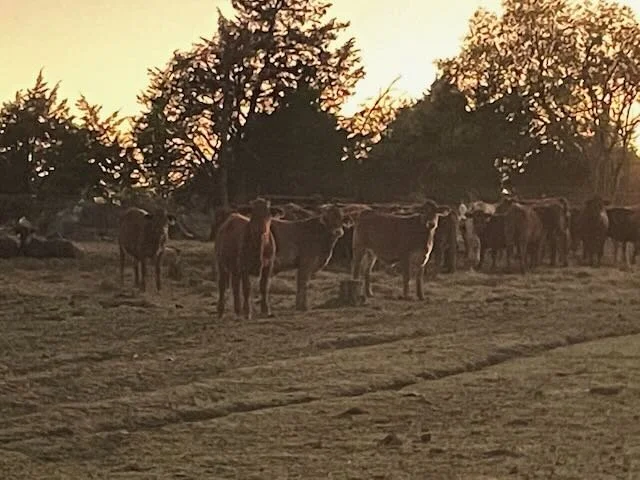
Selecting quality replacement heifers is one of the most important decisions you’ll make for your commercial cattle operation. At EC Ranch, we’ve been raising Beefmaster cattle since 1974, and over five decades, we’ve learned what separates exceptional replacement heifers from average ones.
Whether you’re just starting a herd or improving your existing genetics, this guide will help you make informed decisions that pay dividends for years to come.
Why Beefmaster Cattle?
Before we dive into selection criteria, it’s worth understanding why we’ve committed to Beefmaster cattle for over 50 years. The Beefmaster breed was developed specifically for commercial operations in hot, demanding climates—exactly what we face here in Hunt County, Texas.
Key Beefmaster advantages:
- Heat tolerance: Thrives in Texas summers when other breeds struggle
- Maternal ability: Strong mothering instincts and milk production
- Hybrid vigor: Combines the best traits of Brahman, Hereford, and Shorthorn
- Fertility: Reliable breeders with excellent conception rates
- Docility: Calm temperament makes handling easier and safer
These traits aren’t just marketing—we see them proven every day on our 300-head commercial operation.
The Foundation: Understanding Your Herd Goals
Before you start evaluating individual heifers, clarify your operation’s goals. Are you:
- Building a new herd? Focus on moderate-framed, proven genetics
- Improving maternal traits? Prioritize udder quality and disposition
- Maximizing weaning weights? Look for growth potential and milk production
- Operating on marginal land? Emphasize hardiness and feed efficiency
Your answers will guide which traits to prioritize. At EC Ranch, our focus is on heifers that will produce quality calves with minimal input—cattle that earn their keep on grass.
Conformation: What to Look For
Proper conformation ensures a heifer will be productive for many years. Here’s what we evaluate:
Overall Structure
Frame size: Moderate frame is ideal for commercial operations. Too small limits growth potential; too large increases maintenance costs. We target heifers that will mature at 1,100-1,250 pounds.
Balance and levelness: A well-balanced heifer should be level from hooks to pins, with good depth and spring of rib. She should appear feminine but not frail.
Bone and feet: Adequate bone suggests durability. Straight, correct legs with good feet and pasterns are essential—these heifers need to hold up for 8-10 calf crops.
Front End
- Head: Feminine, alert expression
- Neck: Moderate length, blends smoothly into shoulders
- Shoulders: Smooth, well-attached (not coarse or rough)
- Brisket: Trim and tight (excessive brisket wastes feed)
Middle
- Rib cage: Deep with good spring—indicates capacity for feed and a developing calf
- Back: Strong, level topline
- Loin: Wide and muscular
- Flank: Deep, indicating body capacity
Rear End
This is critical for calving ease and productivity:
- Hip width: Adequate but not excessive (15-18 inches at yearling age)
- Pins: Level with or slightly below hooks
- Rump: Long from hooks to pins, with adequate muscling
- Tail head: Set level, not sunken or raised
Udder (Pre-Breeding Evaluation)
Even in virgin heifers, you can assess udder potential:
- Attachment: Tight and secure (no loose skin or pendulous appearance)
- Teat size: Moderate (not balloon-like or pencil-thin)
- Udder balance: Even quarters
A heifer with poor udder structure will struggle to raise a calf and won’t last in your herd.
Genetic Considerations
Pedigree Analysis
We maintain detailed records on our Beefmaster cattle. When selecting heifers, we evaluate:
Sire selection: What traits did the bull contribute? Look at his EPDs (Expected Progeny Differences) for:
- Birth weight (target: 0 to +2)
- Weaning weight (moderate to high positive)
- Maternal milk (positive values)
- Mature size (moderate)
Dam productivity: A heifer from a cow that consistently raises quality calves is a safe bet. We track:
- Calving interval (365 days or less)
- Weaning weights
- Disposition
- Longevity
Family consistency: If multiple females in a family line perform well, that’s a strong indicator.
Health and Vigor
No amount of genetic potential matters if the heifer isn’t healthy:
- Eyes: Bright, alert, clear (no discharge)
- Hair coat: Slick and shiny (indicates good health and parasite control)
- Body condition: Moderate flesh (BCS 5-6), not too thin or too fat
- Movement: Sound, no limping or stiffness
- Respiration: Quiet and regular
- Manure: Normal consistency (loose manure can indicate parasites or illness)
Always request health records, including vaccinations and deworming history.
Temperament: The Often-Overlooked Factor
In 50 years of raising cattle, I can tell you this with certainty: temperament matters more than most people realize.
Why temperament is critical:
- Safety: Calm cattle are safer for you and anyone working your operation
- Performance: High-stress cattle gain slower and breed back less reliably
- Handling costs: Calm cattle require less time, labor, and facility maintenance
- Longevity: Nervous cattle often develop health problems and don’t last
How we evaluate temperament:
During handling, watch how heifers respond:
- Do they move calmly through chutes and alleys?
- Do they settle quickly when penned?
- Do they bunch or run when approached?
- Are they curious or fearful of people?
At EC Ranch, we handle our cattle regularly from birth. Our replacement heifers are accustomed to people and facilities, which translates to less stress and better performance in your operation.
Age and Development
Optimal Purchase Age
Most commercial operators buy heifers at 12-18 months. This gives you:
- Time to develop them on your program before breeding
- Opportunity to evaluate them in your environment
- Ability to vaccinate and condition before breeding season
Breeding Readiness
If buying bred heifers, verify:
- Breeding dates: Know the conception window
- Pregnancy status: Ultrasound or palpation confirmation
- Fetal age: 60-90 days is ideal
- Bull exposure: Was it natural service or AI?
At EC Ranch, we breed our heifers at 14-15 months to calve at 24 months. This gives them time to develop while keeping your generation interval efficient.
What We Look For at EC Ranch
Our selection criteria have evolved over 50 years, but the fundamentals remain:
- Functionality first: Can this heifer raise a calf efficiently on grass?
- Maternal strength: Will she be a good mother?
- Structural correctness: Will she hold up for multiple calf crops?
- Disposition: Is she safe and easy to handle?
- Genetic merit: Does her pedigree support your goals?
We don’t chase fads or extremes. We select cattle that work in real-world commercial conditions—because that’s exactly where they’ll spend their lives.
Common Mistakes to Avoid
Over the years, we’ve seen buyers make these errors:
Prioritizing show ring traits over functionality: Fancy doesn’t always equal productive. Focus on what makes a heifer profitable, not pretty.
Ignoring structural flaws: A heifer with bad feet or a weak topline might look acceptable now, but she won’t last. Structural problems compound with age and weight.
Buying the cheapest option: Quality costs more initially, but inferior genetics cost you every calf crop. Buy the best you can afford.
Skipping the health check: Always examine heifers carefully and request health records. A sick animal is no bargain.
Neglecting temperament: Don’t convince yourself you can “work with” a nervous heifer. Temperament is heritable—poor disposition will show up in her calves.
Questions to Ask the Seller
When buying replacement heifers, ask:
- What is the herd health protocol? (Vaccinations, deworming, etc.)
- What is the average weaning weight for calves from this heifer group?
- Can I see the dams of these heifers?
- What were the sire’s EPDs?
- Have these heifers been exposed to bulls? (Checked for freemartins?)
- What is your culling criteria?
- What guarantee or recourse do I have if issues arise?
Reputable breeders will answer these questions confidently. If someone hedges or changes the subject, that’s a red flag.
Making the Purchase
Inspection
Always inspect heifers in person if possible. What looks good in photos might reveal problems up close.
Inspection checklist:
- Structural correctness (feet, legs, topline)
- Body condition (not too fat or thin)
- Udder quality (even in unbred heifers)
- Disposition (calm and manageable)
- Health indicators (eyes, coat, respiration)
- Movement (sound, no lameness)
Documentation
Ensure you receive:
- Registration papers (if applicable)
- Health records (vaccinations, treatments)
- Pedigree information (sire and dam details)
- Breeding information (if bred)
- Brand inspection (if required in your state)
Transition
Once you get heifers home:
- Quarantine: Keep them separate from your herd for 30 days
- Vaccinate: Follow your herd health protocol
- Observe: Watch for any illness or behavioral issues
- Gradually introduce: Blend them with your existing cattle slowly
The EC Ranch Approach
Our replacement heifer program reflects five decades of learning what works in Hunt County, Texas. Every heifer we offer for sale meets our own retention standards—we wouldn’t keep her ourselves if we wouldn’t sell her to you.
When you buy from EC Ranch, you get:
- Proven genetics: Cattle from documented, productive cow families
- Honest evaluation: We’ll tell you what we see—good and bad
- Health certainty: Complete vaccination and deworming protocols
- Calm temperament: Cattle handled regularly from birth
- Real-world performance: Heifers proven on our working ranch, not just in a show pen
Final Thoughts
Selecting quality Beefmaster replacement heifers is both science and art. The science is in understanding genetics, conformation, and production traits. The art is recognizing that intangible quality—the “eye appeal” that tells you a heifer will be productive.
After 50 years, I trust my eye, but I still verify with data. I look at pedigrees, I check feet and udders, and I pay attention to temperament. And most importantly, I remember that these heifers aren’t decorations—they’re the foundation of your income.
Choose wisely, and those heifers will reward you with a decade of quality calves and steady income.
Ready to Add Quality Beefmaster Heifers to Your Herd?
At EC Ranch, we raise replacement heifers the same way we raise cattle for ourselves—with attention to genetics, structure, and disposition. If you’re looking for proven Beefmaster genetics from a working commercial operation, we’d be happy to discuss your needs.
View our current heifer inventory or contact us to learn more about our breeding program and available cattle.
About the Author: Cindy Carroll has been raising cattle at EC Ranch in Hunt County, Texas since 1974. With over 50 years of hands-on experience in commercial Beefmaster production, she focuses on selecting cattle that perform in real-world ranch conditions.